

Connects generation scheduling with electrical network studies, combining unit commitment and economic dispatch with load flow and short circuit to identify constraints and assess alternative dispatch scenarios.
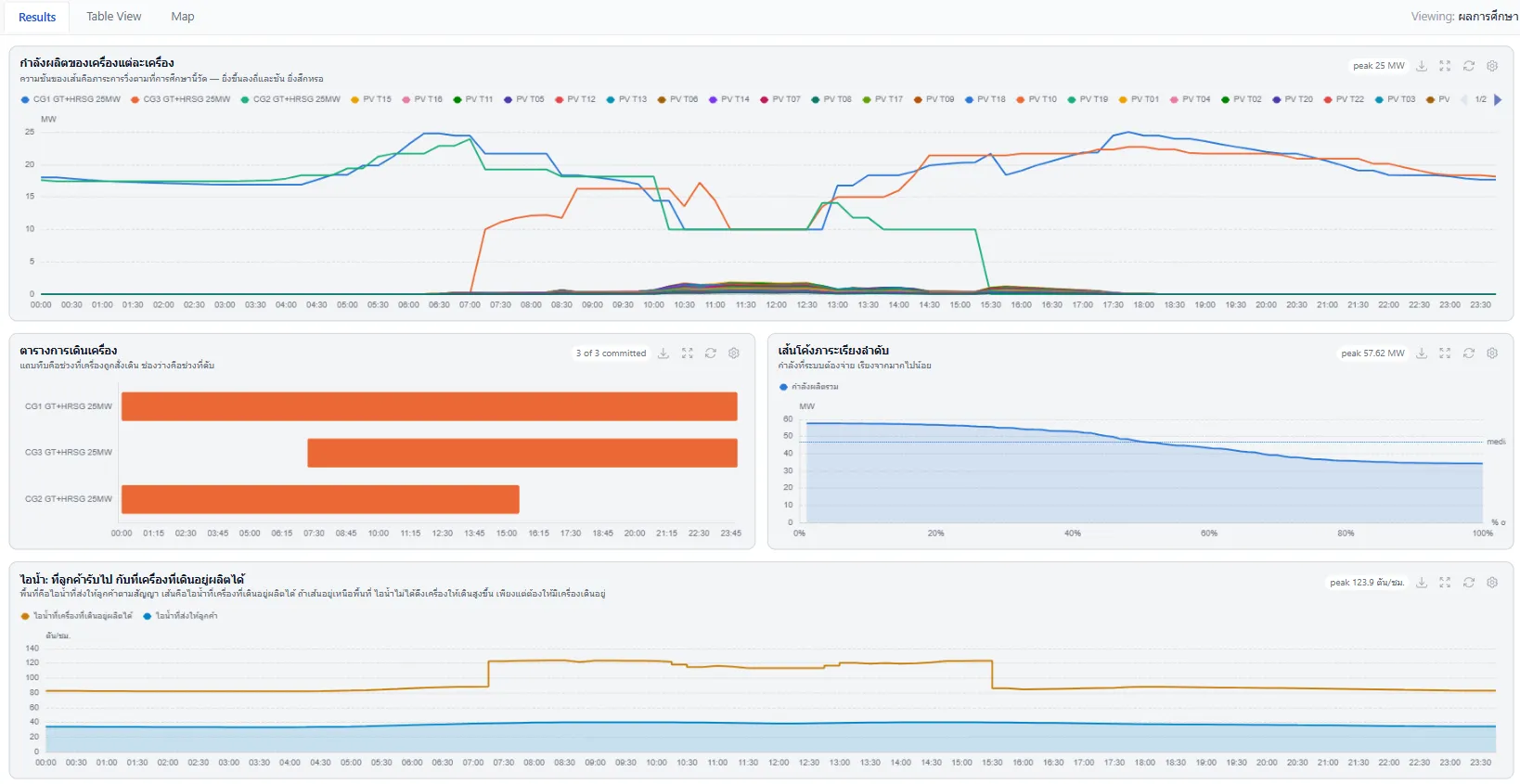
GMOS links two questions that are usually answered in separate studies: which units should run, and can the network carry the result. It solves unit commitment and economic dispatch, then checks each dispatch with load flow and short-circuit calculations on the network model, so constraints such as transformer loading, voltage limits or fault levels show up while the schedule is being made rather than after it.
GGSC uses GMOS in its own studies of generation scheduling and network constraints. There is no public sign-up; if you have a system you would like to study with it, contact us and we will discuss the scope.
What it does
- Unit commitment and economic dispatch within the technical limits of each unit
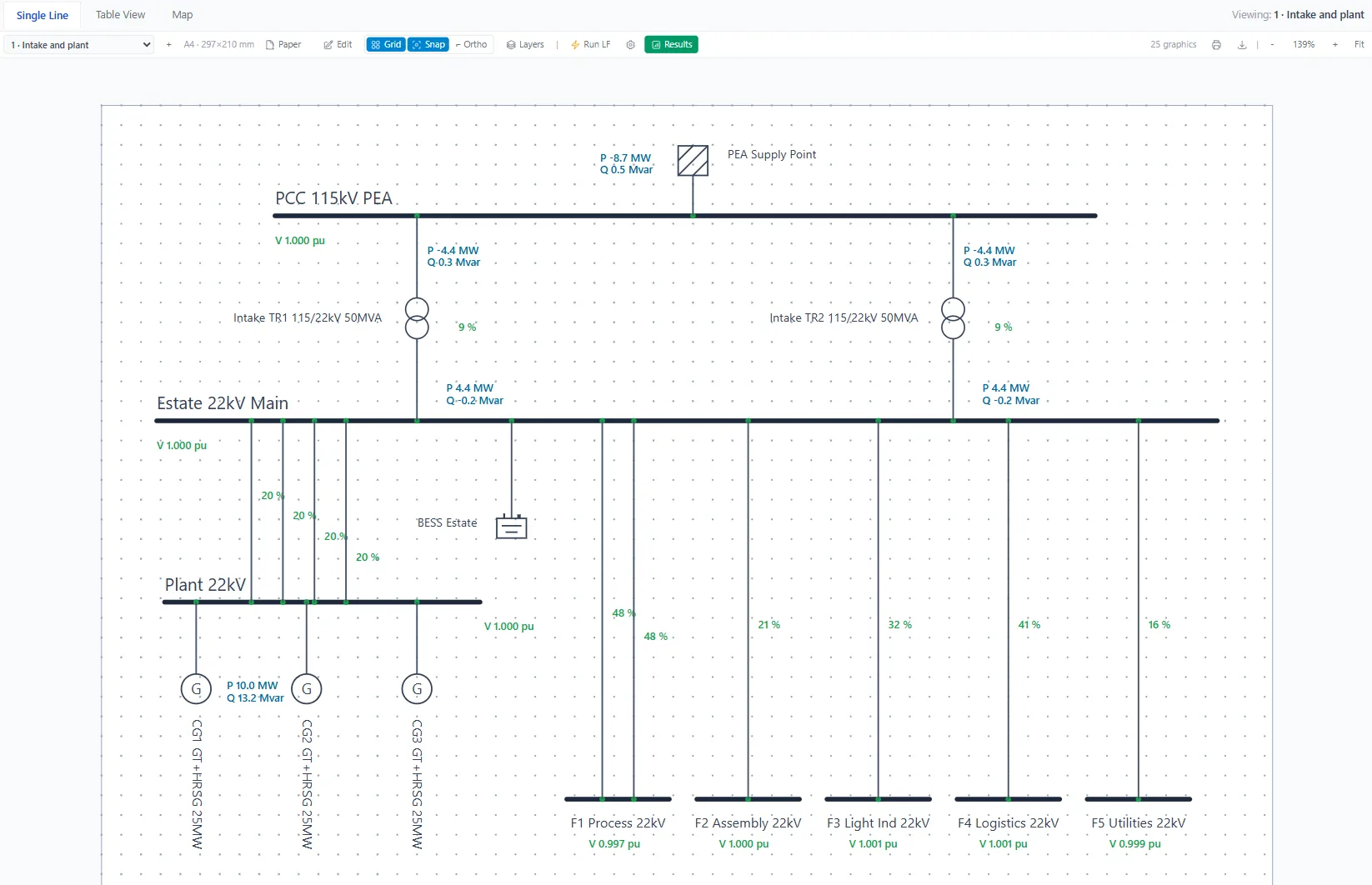
- Load flow and short circuit on the network model for every dispatch
- Network constraint checks: thermal loading, voltage limits and fault levels
- Comparison of dispatch scenarios, for example with more renewable generation or storage
- Process constraints for cogeneration, such as steam demand alongside electricity
- A single-line diagram with the results shown directly on the network
Inside GMOS
Talk to the team behind GMOS.
Questions about GMOS, or a project where it could help? The GGSC engineers who build it will answer.