
Feasibility & Planning
Techno-economic feasibility studies such as hybrid solar and BESS plants under PPA terms, microgrid investment planning with least-cost mix, NPV, IRR, LCOE, LOLE, and ENS, DER and VPP studies, and energy storage roadmaps.
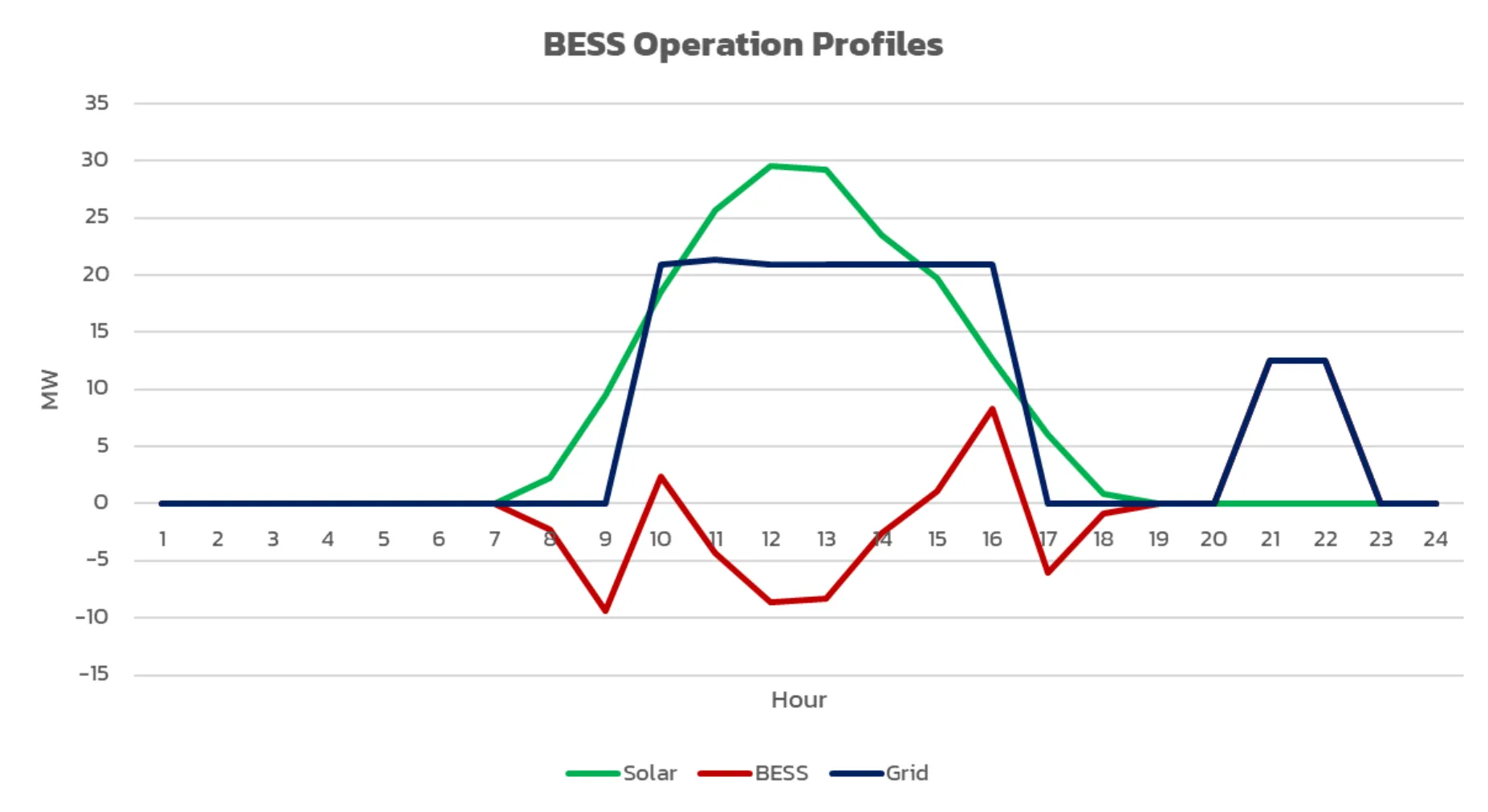
An investment decision needs the engineering and the money in one model. We simulate how the plant or system would actually run, hour by hour under the contract or tariff that applies, and carry that result into the cash flow, so the financial case rests on an operating pattern that can be delivered.
Typical questions: how large a battery a solar plant needs to meet a partial-firm PPA; which mix of solar, storage and diesel serves an off-grid community at least cost and at what reliability; what aggregated distributed resources can offer as a virtual power plant; and where storage pays off across a utility’s substations.
What we assess
- The hourly energy balance under the PPA or tariff terms: energy delivered, shortfall and curtailment
- Equipment sizing, with sensitivity to prices, degradation and the resource year
- Capital and operating costs, NPV, IRR and LCOE
- The least-cost generation and storage mix for microgrids, with reliability measured as LOLE and ENS
- The value of distributed energy resources aggregated as a VPP
- The cost and benefit of grid-scale storage across substations, leading to a staged storage roadmap
How we work
Model the System
Develop or review network models, equipment data, plant models, and interconnection configurations.
Analyze Scenarios
Assess load flow, short circuit, voltage, loading, dynamic response, and operational conditions as required.
Evaluate Solutions
Compare technical options such as BESS, control changes, network reinforcement, or operating adjustments.
Deliver Findings
Provide engineering reports, study models, compliance documentation, and recommendations within the agreed scope.
Tell us what the project needs.
Send a short description, the timeline and any documents the utility or the contractor has issued. We will reply with a proposed scope and the data needed to start.