
Grid Connection, Load Flow, Short Circuit & Power Quality
Steady-state studies under normal and N-1 conditions, short-circuit calculations to IEC 60909, equipment rating checks, network model development and validation, and harmonic and power quality assessment for new connections and network changes.
A new connection or a change to the network has to be shown to work before the utility accepts it. We build the network model or take over an existing one, check it against measured or published data, and then run the cases the connection review asks for: normal operation, N-1 contingencies, maximum and minimum fault levels, and the harmonic picture at the point of connection.
The same studies serve owners who are not connecting anything new: industrial networks that have grown over the years, plants that have changed transformers or cables, and sites where voltage complaints or unexplained tripping point to a network problem.
What we assess
- Bus voltages, branch loading and losses in the base case and under N-1 contingencies
- Transformer tap settings, reactive power compensation and capacitor bank adequacy
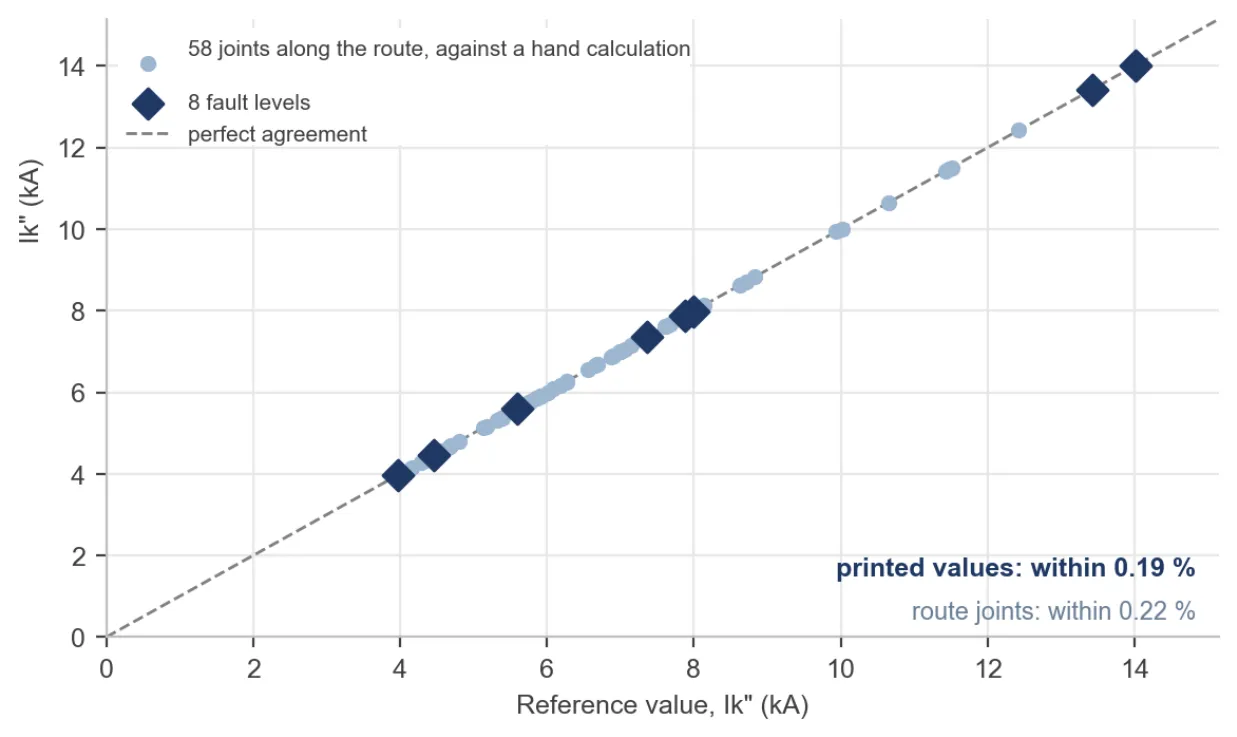
- Three-phase and single-phase-to-earth fault levels to IEC 60909, maximum and minimum
- Breaking and short-time withstand ratings of switchgear, cables and transformers
- Harmonic distortion and resonance at the point of connection, against PEA/MEA requirements
- Voltage fluctuation, flicker and unbalance where large or fast-changing loads are connected
How we work
Model the System
Develop or review network models, equipment data, plant models, and interconnection configurations.
Analyze Scenarios
Assess load flow, short circuit, voltage, loading, dynamic response, and operational conditions as required.
Evaluate Solutions
Compare technical options such as BESS, control changes, network reinforcement, or operating adjustments.
Deliver Findings
Provide engineering reports, study models, compliance documentation, and recommendations within the agreed scope.
Tell us what the project needs.
Send a short description, the timeline and any documents the utility or the contractor has issued. We will reply with a proposed scope and the data needed to start.