
Renewable & BESS Integration
Year-long quasi-dynamic simulation, hosting capacity and reverse power flow analysis, BESS sizing and operating strategy, and rooftop PV integration in LV and MV networks.
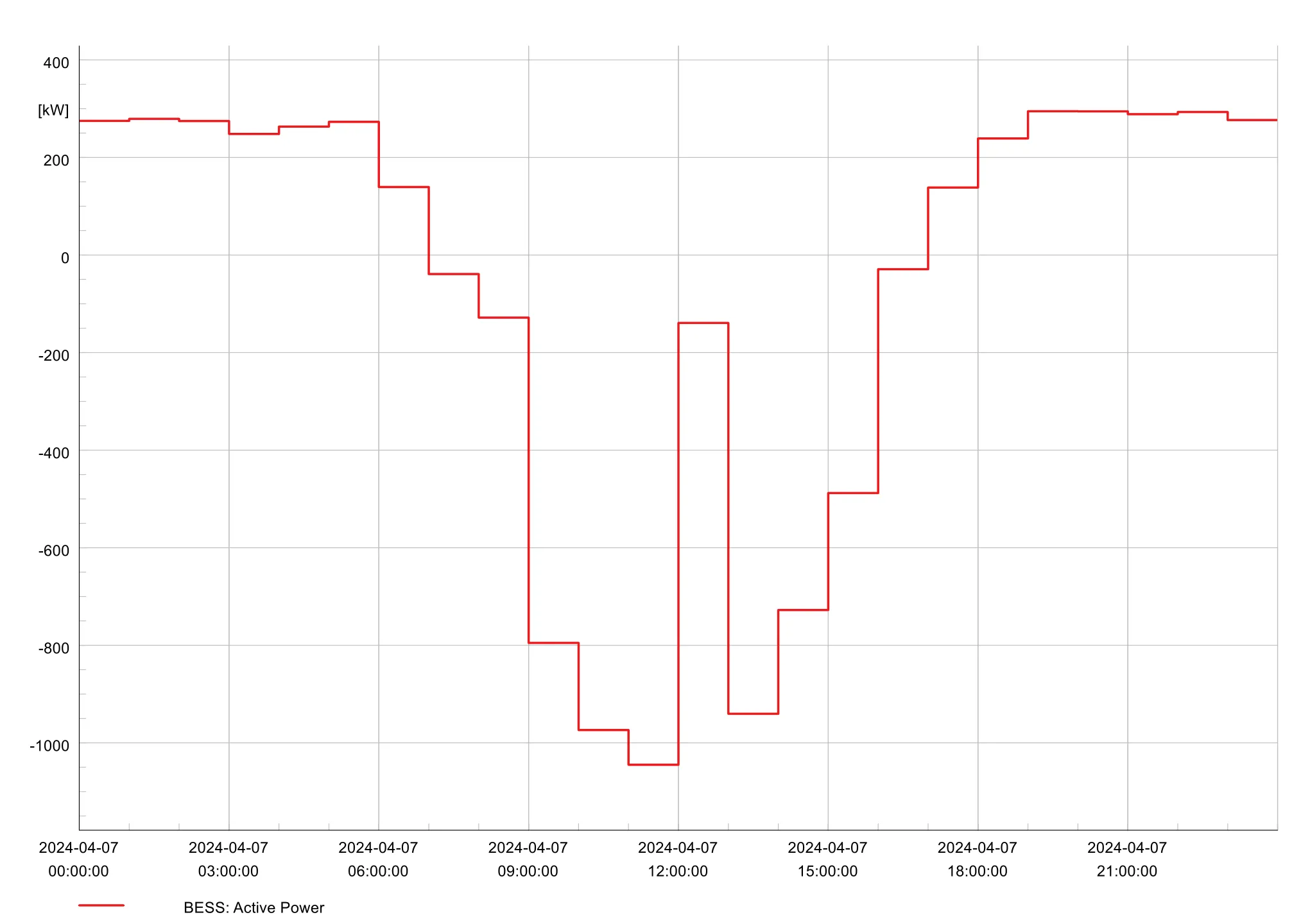
A single peak-load snapshot no longer tells you whether a network can take more solar. Voltage rise and reverse power flow happen at midday on low-load days, and what a battery can do in any hour depends on what it did in the hours before. We simulate the network hour by hour across a full year, so limits show up when they actually occur and storage is sized against real operating patterns.
The work covers distribution networks with high rooftop PV at LV and MV, and sites that add solar and storage behind the meter, for utilities, industrial estates and large energy users.
What we assess
- Hourly voltages and loading over a full year, not only at the peak-load snapshot
- How much PV each feeder or bus can host before a limit is reached
- Reverse power flow at transformers, and its effect on tap changers and protection
- Battery power and energy ratings, state-of-charge limits and charge and discharge schedules
- Operating strategies such as peak shaving, PV time-shifting and export limiting
- The effect of inverter volt/var and volt/watt functions on hosting capacity
How we work
Model the System
Develop or review network models, equipment data, plant models, and interconnection configurations.
Analyze Scenarios
Assess load flow, short circuit, voltage, loading, dynamic response, and operational conditions as required.
Evaluate Solutions
Compare technical options such as BESS, control changes, network reinforcement, or operating adjustments.
Deliver Findings
Provide engineering reports, study models, compliance documentation, and recommendations within the agreed scope.
Tell us what the project needs.
Send a short description, the timeline and any documents the utility or the contractor has issued. We will reply with a proposed scope and the data needed to start.